

MiddleWeb’s March Articles
Create connections so students, schools and communities thrive. Also: student research, schoolwide reads, AI assessment help, war news, better grading, civics, fractions, cozy classrooms.
Who can keep up with anything these days?! Once a month we’re making it easy for MiddleWeb Substack subscribers by sending you brief descriptions of last month’s new MiddleWeb.com articles and reviews – written (as always) by educators who are doing the work. Just click on a title to check it out!
Articles
We Need to Rethink How We Teach Research
In a world saturated with misinformation, teaching students how to research isn’t just about completing an assignment. It’s about helping them become independent investigators who “pursue truth even when we aren’t there to guide them,” says Curtis Chandler. AI adds to the urgency.
How Schools & Families Can Nurture Connection
“We are all lacking community, despite our illusion of connectedness,” writes teacher Amber Chandler. In her new book, she explores key issues by writing letters to five stakeholder groups she believes can help reclaim connection. Read what she says about school attendance.
We Joined Schoolwide Reads with Author Visits
Well-planned schoolwide reads, paired with author visits, have the power to strengthen community, support belonging, and create shared experiences that extend beyond a single event. Kasey Short describes her school’s process and offers some tips for others who want to try it.

AI Help with Assessment Saves Me Valuable Time
What AI has done in its teacher assistant role this year has been transformative for teacher leader Katie Durkin. It’s helped her save time by generating ideas for formative assessments, giving her more time to provide students personal feedback – “a feat for any English teacher.”
Everything I Knew about Grading Was Wrong
Thanks to her “joyful” journey from traditional to competency-based grading, teacher and instructional coach Stephanie Farley has seen not only more growth of skill among her students but also increased competence, “which increases confidence, which increases resilience.”
Cozy Classroom Tweaks to Make Kids Welcome
A new plant by the window or desks rearranged throughout your classroom? Or both? Teacher Dina Strasser suggests these along with scribbling spaces, non-fluorescent lights, and diffusers to create an atmosphere where your students can settle into learning. A Spring Break tweak?

How Do Your Students Get Their War News?
During military crises, we look for reliable news sources to stay informed. A high percentage of young people today rely solely on social media for their war news. With the advent of AI-generated images and video, says expert Frank Baker, media literacy skills become paramount.
3 Ways to Help Students Make Sense of Fractions
In our math classrooms, writes Mona Iehl, we’ve often trained students to look for what to do instead of making sense of what the problem is actually saying. When they see fractions, they search for a rule. But what if the goal is not to decode but to understand the situation?
Civics: Writing Letters to Politicians with AI’s Help
When Sarah Cooper updated her civics lesson that asks students to write to their political representatives, she found that adding AI to the research process resulted in letters that were not just different but markedly better. Best of all, they were in her students’ own voices.
REVIEWS
Preparing Students to Challenge Inequity
The authors of Educating for Justice provide a comprehensive framework for schools looking to move beyond superficial diversity initiatives and create meaningful, school-wide change that empowers students to critically engage with social injustices, writes Melinda Stewart.
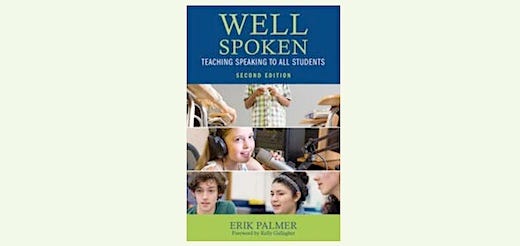
Tools to Help Students Speak with Confidence
In a new edition of Well Spoken, Erik Palmer stresses the subtle shift from public speaking to “all speaking” – introducing activities to practice skills needed not just in speeches but in digital environments and “any time a speaker gives thought to what they are going to say.”
Integrating AI Into the Human Act of Teaching
The AI Assist by Nathan Lang-Raad offers a solid starting point for using artificial intelligence in the classroom, writes teacher Ralph Covino. Raad emphasizes the need to keep the human teacher at the center of instruction and includes a framework and useful guiding questions.
Documenting Learning to Help Humanize Education
In The Writing Teacher’s Guide to Pedagogical Documentation Angela Stockman zeroes in on documenting the learning process, which consists of collecting multimodal, qualitative evidence while students work, to assess learning and adjust instruction, writes Andrew Krasnavage.