

MW Substack 038: Class Discussions
Active classroom talk helps students process complex ideas, grow vocabulary, increase confidence, build voice, and develop collective understanding.
Welcome to MiddleWeb Substack. It’s a free, topical resource for middle grades educators, featuring a selection of MiddleWeb’s most popular and influential articles on a particular topic or theme – plus a book review blurb, and a noteworthy 4-8 resource we’ve spotted elsewhere. That’s it!
Dear paid subscribers: Thank you! You’re providing essential support that helps MiddleWeb.com continue our commitment to publish the voices of middle grades teachers – and to update and preserve our thousands of articles and reviews written for and by educators who support kids in grades 4-8.
If you’re a free subscriber, we could really use your help – consider a paid subscription when you can. ($5 month; $50 year).
► CLASS DISCUSSION
Classroom talk is one of THE most powerful tools for learning.
Growing up, most of us can remember spending endless hours in classrooms where little or no real “learning conversation” took place. So much so that those teachers who were truly skillful at promoting and managing in-depth speaking and listening stand out in our memory. Decades of research confirm what those teachers intuited: Good class discussions are really, really important.
Long-time MiddleWeb contributor Megan Kelly is one of more than a dozen educators who’ve written for us on the topic. Megan, an international teacher who’s led student discussions in classrooms around the world, begins her article below with the Why:
“We have probably all heard Dr. Jennifer York-Barr’s quote, “The person doing the talking is often the person doing the learning.” As we begin a discussion-based unit in my class, this is the quote that guides my practice.
“I’m trying to find more opportunities for students to speak with each other in a variety of configurations while I coach on the side. By using formal and informal opportunities to talk, I’m helping students grow their vocabulary, build their community, and increase their confidence.”
As you browse the collection below, we think you’ll see that all of our teacher writers are driven by goals much like Megan’s. Best of all, they’ve discovered many productive ways to achieve them.

Short Activities to Boost Student Talk in Class
Megan Kelly understands the learning power of academic conversation in all its aspects. To tap into that power source, she starts off every day with the Question of the Day. “This sometimes aligns with what we are learning, but most of the time it’s just a fun, provocative question to get them thinking.” It’s low pressure and gets students warmed up for what’s ahead.
How to Scaffold Skills for Student Discussions
Meaningful academic conversation makes for sticky learning, but most students don’t bring a high proficiency in the needed skills to the classroom. Expert Jackie Walsh describes a step-by-step process that can help teachers cultivate deeper student discussions.
For Real Conversations Get All Your Kids Talking
Classroom discourse is an opportunity for students to develop voice, advocate positions, and build collective understanding. Using video clips, Paul Bambrick-Santoyo and Stephen Chiger show how teacher Vy Graham structures and prepares for discourse so all her students experience it equitably.
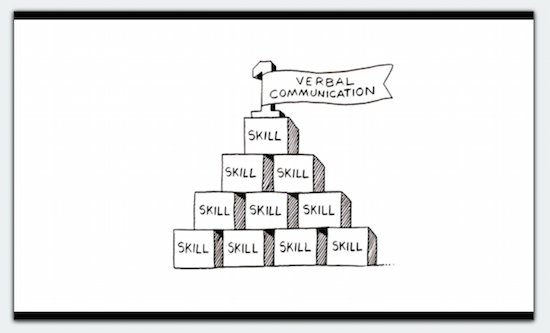
Speaking & Listening Are Core Skills Today
Our students are not successful oral communicators, says author-consultant Erik Palmer. Yet the rise of connected learning, podcasts, Face Time, Zoom, Snapchat, YouTube Shorts, and other social media make speaking and listening skills essential. Read (and watch) Palmer’s compelling case for change.
Rewiring Student Brains for Class Discussions
Many teachers are intrigued by the Socratic method but worry “it won’t work with my students.” A Socratic seminar calls on ALL the big executive skills. Patricia Cook and Susanne Croasdaile found that we don’t need to wait until they’re all “ready” – we can just dive in!
Learning the Secrets of Good Class Discussions
One area of Matt Smith’s teaching “that has improved tremendously since my novice days” is facilitating productive discussions. Students need to engage in active talk to process complex ideas. This won’t happen, he says, until teachers master “wait time” and stop affirming too much.
Creating a Safe Space for Difficult Conversations
In his powerful book Not Light, But Fire teacher Matthew Kay shares three rules of discussion – each centered around listening – that he teaches his students. His goal is to transform the classroom into a true “safe space” for difficult conversations about race and life.

Don’t Let Class Discussion Be Like a Ping Pong Game
Too often classroom questioning and discussion becomes pedagogical ping-pong, resulting in predictable, back-and-forth exchanges between teachers and students. Use these strategies and tools shared by teacher educator and former Kansas TOY Curtis Chandler to up your game.
Engaging MLs in Daily Academic Conversations
If we want multilinguals to develop their speaking skills while learning content (and we do!) then they need multiple opportunities to engage in academic conversation throughout the school day. ML/EL education leader Jenny Vo shares her favorite successful strategies.
Teach Students to Build Up Ideas with Dialogue
Frequent high-quality class conversations make a huge difference in how far middle grades students advance academically, socially and emotionally, writes author and teaching coach Jeff Zwiers. Learn about five skills that can help students build ideas through dialogue.
Let’s Talk! How to Stage Good Class Discussions
Students love to talk! And that’s mostly a good thing, if teachers can harness the natural social drive of tweens and teens “and use it to pull the wagon of content learning through whole-class discussions.” Try Rita Platt’s proven step-by-step map to discussion success.
Staying on Task with Meaningful Student Talk
To move beyond traditional classroom discussion focused on answering a few teacher questions, Dr. Barbara Blackburn advocates student-driven discourse that emphasizes “on-task” talk and academic vocabulary. The result: purposeful dialogue leading to deeper understanding.

►OUR BOOK REVIEW
Tools to help students speak with confidence.
In the 2nd Edition of Well Spoken: Teaching Speaking to All Students, Erik Palmer stresses the subtle shift from public speaking to “all speaking” – introducing activities to practice skills needed “any time a speaker gives thought to what they are going to say.” Highly recommended by teacher leader Jeny Randall. Read the complete review.
►ELSEWHERE
Overcome the hesitation of your reluctant speakers.
You get the best of both mediums in this 4-minute video from Edutopia — a transcript and a movie filmed in a classroom. “Even when many students hesitate to speak up, teachers can inspire thoughtful, vibrant discussion with these classroom-tested strategies” featured in 5 Ways to Elevate Your Classroom Discussions.